The Causeway: The Road That Decides Who Stays
Why coastal gothic fiction keeps building a road that the sea can close, and what it does to a story once nobody can leave.
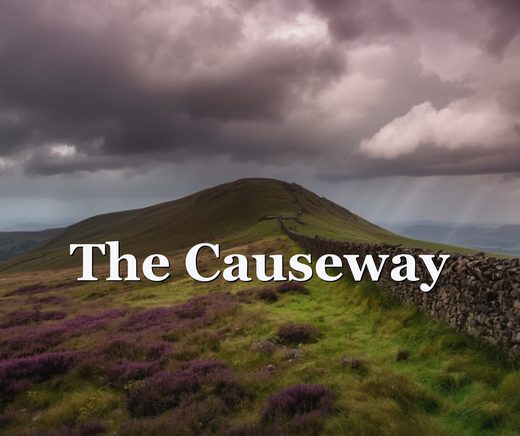
There is a particular kind of road that only exists for part of the day. Twice in twenty-four hours the sea folds back over it, and for a window that nobody controls and everybody has memorised, the house on the far side is reachable. Then the water comes back, and it is not. Coastal gothic fiction did not invent the tidal causeway, but it worked out, faster than any other genre, what to do with a road that can revoke itself.
A Door That Locks From the Outside
Most gothic mysteries need a reason nobody simply leaves once things turn bad, and the usual answers are social ones: pride, debt, a will not yet read, a reputation not yet salvaged. The causeway offers something better than a reason. It offers a fact. Nobody stays at the house because they are too proud to go. They stay because the tide table on the kitchen wall says the road will be underwater for the next six hours, and the sea has never once cared how urgently someone wanted to be somewhere else.
That is the quiet trick of the device. A locked door can be picked, argued with, or eventually confessed to. A drowned road cannot be reasoned with at all, which means a story built around one gets to strand its characters without ever making the strander a character itself. Nobody is guilty of trapping anyone. The moon did it, on a schedule published in the newspaper, and that innocence is exactly what makes the isolation so hard to escape by any means short of waiting.
The Two Kinds of Crossing
A bridge asks whether you are allowed across. A causeway asks whether the sea will let you try.
A permanent bridge and a tidal causeway look similar on a map and behave nothing alike on the page. A bridge is a piece of engineering, answerable to planning committees and load limits, and a story can put a guard on it, or a toll, or a washed-out plank, all of which are human obstacles with human solutions. A causeway answers to the moon. It cannot be bribed, argued past, or repaired by a competent handyman before nightfall, and a novelist who wants a genuinely inarguable form of isolation reaches for it precisely because every other kind of barrier eventually yields to a sufficiently determined character. The tide does not yield. It simply comes back.
Who Watches the Clock
Every household on a tidal crossing produces, without exception, one person who has the timetable by heart. It is rarely the owner of the house. More often it is the housekeeper, the boatman, the neighbour who has lived there longest, someone whose authority in the story comes not from money or blood but from knowing precisely when the road disappears and precisely when it returns. That knowledge is its own kind of power, and coastal gothic fiction uses it constantly to promote an otherwise minor character into the person everyone must eventually ask for permission to leave. The Tide House Mysteries lean on this figure often enough that readers of the series learn to watch for them: the one character the tide has made impossible to ignore.
The Return Crossing Nobody Wants
The most interesting use of a tidal causeway rarely happens on the way in. Arriving at a cut-off house is simply the setup; anyone can be stranded by bad timing. The device does its real work on the way out, when the water has receded again, the road is passable, and a character who could now leave chooses, for reasons the story has spent its length earning, to stay a little longer. The sea has stopped making the decision for them. That is usually the moment a coastal gothic novel reveals what it was actually about, because the causeway was never really the obstacle. It was the excuse a character needed to have a reason, other than their own choosing, to remain somewhere they were afraid to admit they wanted to be.
That reversal is why the device outlives its own novelty. A causeway can only trap a character physically for so many pages before the trick wears thin, and every writer who reaches for one eventually has to answer the harder question: what does this person do with a door that has just, unexpectedly, swung open. The tide always comes back out. What a character does with that first uncontested hour is where the story stops being about geography and starts being about them.
Brian Courrier writes gothic crime, espionage and science fiction. Browse the collection or start with a free book.