Domestic Thriller Books: Why Home Feels Unsafe
Why do domestic thrillers set in ordinary homes terrify us most? Explore the psychology of the genre and where to start reading, from PMV Publishing.
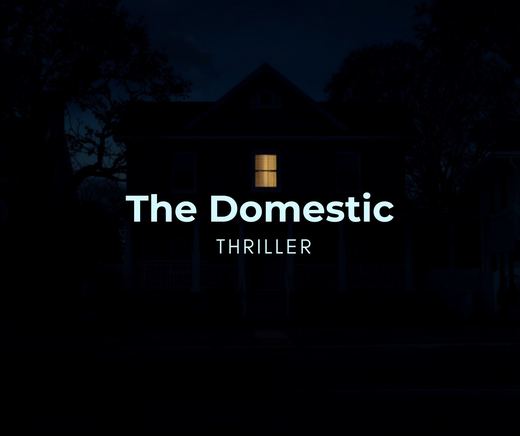
There's a particular kind of fear that no haunted mansion or foreign assassin can match. It's the fear of the familiar turning strange. The sound of a key in the front door when you know you're home alone. The phone that lights up with a message meant for someone else. The domestic thriller lives in that small, electric gap between the life you think you have and the one quietly assembling itself underneath.
We can close the book on a monster in the woods and feel safe again. It's much harder to close the book on a marriage, a family, or a house that looks almost exactly like our own. That discomfort is the whole point, and it's why this corner of fiction keeps pulling readers back long after the lights are off.
The living room became the crime scene
For decades, thrillers happened somewhere else. A shadowy alley, a war zone, a remote island cut off by a storm. The threat was exotic, and part of the pleasure was the sheer distance between the reader's safe chair and the danger on the page. You could visit the fear and then leave it there.
The domestic thriller collapsed that distance. It moved the crime scene into the kitchen, the nursery, the shared bed. Suddenly the antagonist wasn't a stranger in a mask. It was a spouse, a neighbor, a mother, a best friend, someone with a key, a history, and a perfectly good reason to be standing in the hallway at midnight. The genre asks a question most of us would rather not sit with. How well do you actually know the people closest to you?
Why we can't look away from the danger next door
The suburbs are the perfect stage for this because they promise the opposite of danger. Trimmed lawns, motion-sensor lights, doors that lock from the inside. Order. A domestic thriller takes that promise, lets a single thread come loose, and then we watch, breath held, as the whole comfortable picture quietly unravels.
There's a psychological reason it grips us so hard. We are wired to scan for threats, and the most unsettling threat is the one wearing a familiar face. When a book puts betrayal inside a home that resembles ours, it isn't just telling a story. It's rehearsing a fear we already carry, low and constant, that the ground beneath our ordinary life is less solid than we let ourselves believe.
The quiet terror of an unreliable life
The strongest books in this genre understand that the real suspense isn't only about what happened. It's about what the character, and the reader, can trust. Memory bends. People lie kindly. A version of events gets repeated so often it hardens into fact. That slow erosion of certainty is where a book like The Architecture of Harm does its finest work, building dread not from gore or jump scares but from the creeping sense that the walls of a life were engineered, deliberately, by someone who smiled the entire time.
When a story makes you doubt a narrator's own account of her days, it makes you doubt something larger. It reminds you how much of your reality is simply what you have been told, again and again, by people you had no reason to question. That's a far more intimate scare than any masked figure in the dark, because you carry it home with you.
What the best domestic thrillers understand about us
Great domestic suspense isn't really about crime. It's about intimacy weaponized. The affair, the inheritance, the secret account, the child who isn't sleeping for reasons no one will name, these are only the surface. Underneath runs something more human. The way love and control can wear the same coat. The way a home can be both shelter and trap, sometimes on the same evening.
That's why these books land so hard and stay with us. They take the settings we associate with safety and gently ask whether safety was ever the right word. The most memorable ones don't leave you afraid of a killer. They leave you looking a little longer at your own hallway, your own routines, the people you kiss goodnight, and wondering how much of what you call normal you have simply agreed not to examine.
Where to start if you love a slow, creeping dread
If that particular flavor of unease appeals to you, the pleasure is in the patience. Domestic thrillers reward readers who lean into the slow burn, who notice the small wrongness before the characters do. Start with a book that trusts you to feel the tension building rather than one that sprints to the reveal and leaves nothing to sit with afterward.
From there, it's worth exploring the quieter, more psychological end of the shelf. Titles like The Record and The Prior Output play in the same unsettling territory, where an ordinary life is examined until its seams begin to show and you realize, a beat too late, what was hiding in plain sight. You can browse the full run of suspense and thriller titles over at the shop and pick the mood that matches the kind of night you're in for.
The best domestic thrillers do something generous, in their own dark way. They let us feel the fear from the safety of a reading chair, then hand our ordinary lives back to us a little more appreciated for being calm. At PMV Publishing, that's exactly the kind of story we love to put in your hands, the one that keeps you up an hour past bedtime and makes the click of the front door lock sound sweeter than it ever has. Pour something warm, settle in, and let the quiet street do the rest.
Brian Courrier writes gothic crime, espionage and science fiction. Browse the collection or start with a free book.