The Grounds Remember Longer Than the House
Walled gardens, drained ponds and unpruned avenues: why the land around a house in mystery fiction keeps a longer and less editable record than its rooms.
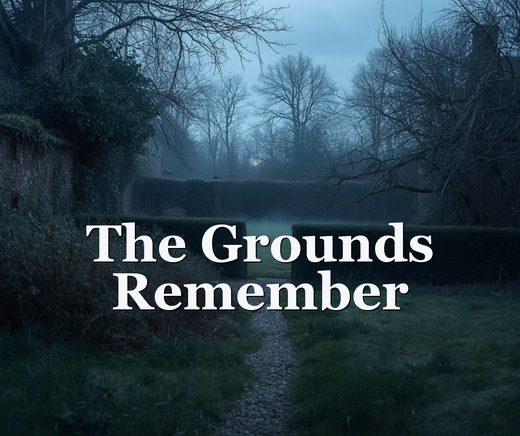
When a house in a mystery is searched, the search tends to stop at the walls. Rooms are inventoried, drawers turned out, a floorboard lifted. The grounds get a paragraph of weather and a description of the drive. It is the wrong way around. Of everything a property holds, the land is the part that keeps the longest record and the part nobody thought to edit.
A room can be put right in an afternoon. Ground cannot. Paint covers a mark; a lawn will not. Where people actually walked, the grass thins into a line that no one intended and no tidying removes. A hedge left alone for two seasons announces the month the gardener stopped coming. An avenue planted for a wedding measures the marriage in growth rings. Interiors record decisions, which can be reversed. Land records habits, which are much harder to lie about afterward.
The walled garden is the quietest closed space in fiction
The walled kitchen garden is one of the few places in an English house designed from the outset to control who comes and goes. Brick on four sides, one door, sometimes a key kept on a particular hook. It was built for frost and rabbits rather than for secrets, which is precisely why it makes such good cover. A character among the espaliered pears is not hiding, only standing where the windows of the house cannot see.
The Margot Fenn Mysteries lean on that geometry. Indoors, a country house is the most heavily observed building imaginable: a maid on the stairs, a cook who knows the hour of every kettle, doors that carry sound. Step through the garden door and the witnesses stop. But enclosure runs both ways, and a wall that keeps the household out also narrows the list of people who could possibly have been inside. The same brick that grants privacy takes away the crowd a suspect might have hidden in.
A room can be tidied before the guests arrive. A garden can only be tidied for a season, and next spring it will say what you did.
Water returns things on its own schedule
Give a property water and the land stops being a passive record and becomes a participant. Rivers move their banks. A tide comes across a causeway whether or not the plot is ready for it. Water is the only feature of an estate that takes things away and hands them back later, in its own time, and usually in the wrong order.
The Tide House Mysteries are built on that unreliability. The House Below the Tide and The House on the Salt treat the shoreline as a boundary that will not stay where the deeds put it, so that the question is rarely where a thing was left and almost always where the water has since decided to put it. The Unmapped pushes the idea further inland. In The Drowned Glen and The Cleared Island, the ground itself has been submerged or emptied by policy, and a landscape under a reservoir keeps everything it was given and makes it unreachable.
Land becomes evidence when somebody has to value it
Probate is where the grounds finally get read properly, because probate forces someone to walk them with a document in hand. The Thrushmere Inquests are largely about that moment. In The Clearance at Cawdermere and The Sale at Marnhope, an estate has to be measured, valued and disposed of, and the survey turns up what forty years of ordinary occupation quietly absorbed: a fence standing in the wrong field, a right of way used so long it has become a claim, an orchard that appears on the plan and no longer exists on the hill.
None of that begins as a crime. It begins as money. But an inventory is an unusually honest kind of witness, since it is compiled by people with no theory to protect, and it dates things. The Last Tenant at Kessingholt understands that a tenancy agreement can fix a person to an acre more firmly than any statement they might give about themselves.
Outdoors has no witnesses, only impressions
The reason the grounds unsettle a reader is not that they are threatening. Gothic houses perform their menace, and part of the pleasure of The Shadow on Ravenswood Hall is watching a building work at being frightening. The land does not perform at all. It has no interest in the story. It simply takes the impression of whatever crossed it and holds that impression for a season or a century, depending on the weather.
This is why an outdoor discovery reads so differently from an indoor one. A body in a locked study is a puzzle someone constructed. A depression in the turf at the end of a walled garden is not addressed to anyone. Nobody arranged it to be found or to be missed, and that indifference is far more disquieting than any staged room.
The last acre
Fiction has spent two centuries searching the rooms of these houses and the results are known: the drawer, the letter, the loose board. The grounds remain comparatively unread, which is where the good material still is. Every estate has a corner that has not been touched since the money ran out, and whatever happened there is still legible to anyone patient enough to look at the grass rather than the windows.
The Margot Fenn Mysteries begin with The Last Supper at Marrowbourne, the Tide House novels with The House at Winterkeep, and The Thrushmere Inquests with The Clearance at Cawdermere. All three first books are free to read.
Brian Courrier writes gothic crime, espionage and science fiction. Browse the collection or start with a free book.