The Long Approach: What the Walk to the House Reveals
In country-house mystery, the drive to the door does as much work as the door itself. On Margot Fenn Mysteries and the geography of arrival.
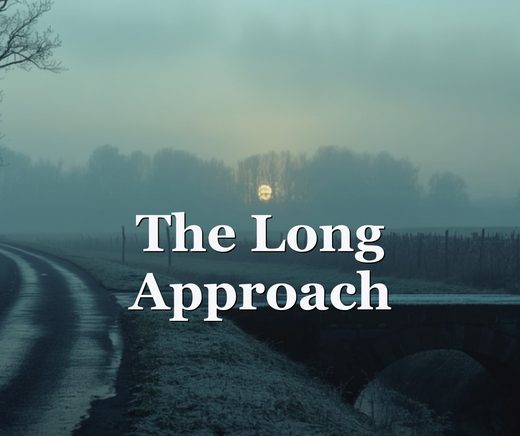
There is a particular kind of silence that belongs only to a long drive in winter. Gravel under the tyres, then not gravel but mud frozen into ruts. Hedgerows closing overhead until the sky is a strip. The house itself withheld, deliberately or not, until the final bend — and by the time it appears, the visitor has already decided something about the people inside it. Country-house mystery knows this, and uses it more carefully than almost any other form of crime writing. The murder is rarely the first thing the reader is made to feel. The approach is.
Distance as Character
A city crime novel can put you in the room in a sentence. A country-house mystery makes you walk towards it, and the walking is not wasted time — it is characterisation, delivered before a single person has spoken. The state of a drive tells you what the family cannot bring itself to say aloud. Weeds through the gravel mean money has stopped moving. A gate wired shut instead of mended means someone gave up maintaining the fiction of welcome. A lodge house with its curtains drawn in daylight means somebody inside knows exactly who is coming, and would rather not watch them arrive.
This is why the best writers in the genre resist the temptation to cut straight to the hall. The Margot Fenn Mysteries, set across a scatter of English estates in genteel and quiet decline, spend real attention on the road before the house — because the road is where suspicion starts to form honestly, before anyone has had the chance to perform for a stranger. By the time a character reaches the front step, they have already been read.
A house can be dressed for a guest. A drive, left to itself for a season, cannot lie about who has stopped caring for it.
Who Controls the Road
The approach is also where the genre quietly settles its hierarchies. Family arrive by the front sweep, in daylight, expected. Tradesmen and the vicar use the side lane. The investigator, more often than not, arrives by whichever route the household did not choose for her — on foot from the village, or dropped at the lodge gate by a car that will not come back for her until she asks. It is a small indignity, rarely commented on directly, and it does real work: it puts the person doing the looking on the same uncertain ground as everyone she is about to question. She has not been received as family. She has walked the same frozen lane as the tradesmen, and noticed the same wired gate.
That levelling matters more than it first appears. A detective who is shown straight into the drawing room by an obliging butler has already been sorted into the house's own understanding of who matters. One who has to find her own way up the drive, watching for ice, counting the unlit windows, arrives with her judgement still her own. The Last Supper at Marrowbourne, the free opening volume of the Margot Fenn Mysteries, spends nearly two full chapters on exactly this kind of arrival before a body is so much as mentioned — and readers who stay with it tend to notice, by The Silent Cure at Stillwater House and The Last Will at Thornmere, that they have been trained to read a driveway the way the investigator does: as evidence that has simply not been photographed yet.
The Return Journey
It is worth noticing, too, that the walk back down the same drive at the end of the book is never written the same way twice. The hedgerows have not changed. The gate is still wired shut, or it has finally been mended, and either fact tells you something about what has been settled inside. Country-house mystery is often accused of caring more about setting than plot, as though the two were separable. They are not. The house was never simply where the crime happened. It was the first witness, and the drive leading up to it was giving evidence long before anyone thought to ask.
Brian Courrier writes gothic crime, espionage and science fiction. Browse the collection or start with a free book.