The Sleeper Agent: Spy Fiction's Scariest Idea
The sleeper agent is spy fiction's quietest villain: the ordinary neighbor who was someone else all along. Why the slow-burn spy thriller unsettles us most.
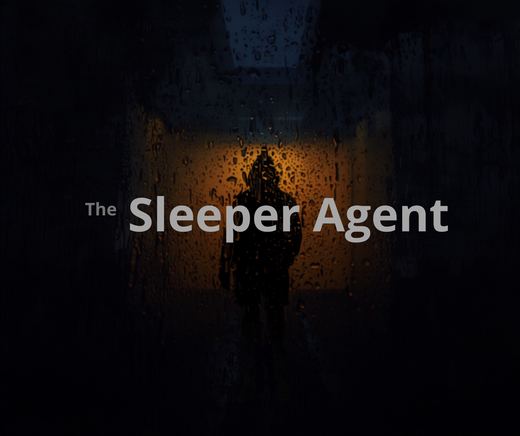
He mows his lawn on Saturdays. She brings soup when someone on the street is sick. He coaches the under-nines and never misses a game. For years, maybe decades, this person has been exactly who they appear to be — polite, forgettable, woven so tightly into the ordinary fabric of a place that no one thinks to look twice. That is the point. Because one day a phone rings, or a coded line surfaces in a newspaper, and the person you thought you knew simply stops being that person. The sleeper agent is spy fiction's quietest monster, and once you understand why, you may never read a thriller the same way again.
The horror hiding in plain sight
Most villains announce themselves. They have scarred faces, private armies, long speeches about power. The sleeper agent has none of that. Their entire threat comes from being unremarkable — from being the last person you would ever suspect. That inversion is what unsettles us. We are wired to fear the stranger at the door, but the sleeper agent has already been let inside. They have eaten at your table. They have held your baby. The danger isn't out there in the dark; it's sitting across from you, smiling, asking how your week was.
Great espionage writing understands that this is a deeply human fear, not just a plot device. Most of us carry a quiet worry that we don't fully know the people closest to us. The sleeper agent takes that worry and makes it literal.
A life built to be forgotten
What separates a sleeper from an ordinary spy is patience — an almost inhuman amount of it. A field operative moves fast, works a target, and gets out. A sleeper does the opposite. They construct a legend, an entire false life, and then they live it so convincingly that even they begin to forget where the cover ends and the real person begins. They fall in love. They raise children. They pay their taxes and complain about the weather. The cover isn't a costume they slip on for an evening; it's the years they actually lived.
This is where a series like the Marcus Vane novels earns its slow-building tension. In books such as The Lisbon Exchange, the danger rarely arrives as a gunfight in a crowded square. It comes from the creeping realization that someone trusted, someone long embedded, has been playing a far longer game than anyone imagined. The best spy fiction knows the most frightening betrayal is the one that took years to arrange.
Why the waiting is the real weapon
There's a strange cruelty to the sleeper's existence, and the best writers lean into it. Imagine building a life you were never allowed to keep. Imagine loving people you might one day be ordered to leave, or worse. The waiting isn't dead time between missions; the waiting is the mission. Every ordinary dinner becomes a performance. Every friendship is, on some level, a lie that has to be maintained without ever letting the mask slip.
That tension is why these stories hold us so tightly. We keep turning pages not because we're waiting for an explosion, but because we're waiting for a mask to crack. The suspense lives in the silence between what a character says out loud and what we suspect they are hiding.
The moment everything turns
Then comes activation — the single scene every sleeper story is quietly building toward. A word. A signal. A face from a past the character believed was buried. In an instant, the loyal neighbor becomes a weapon, and the reader is left reeling, because they had come to like this person. That's the trick a skilled author pulls off: they make you care about someone before revealing what that someone truly is. The finest thrillers complicate even this. Sometimes the sleeper doesn't want to wake up. Sometimes the fake life has quietly become the real one, and the order to act lands like a death sentence for the person they've become. Novels like The Bucharest Ledger and The Belgrade Cipher live in exactly this territory, where loyalty, memory, and identity blur until you're no longer sure who to root for.
What the sleeper agent really reveals
Strip away the tradecraft and the sleeper agent is asking a question that has nothing to do with spies: how well do we truly know anyone, including ourselves? We all wear different versions of ourselves for different rooms — the work self, the family self, the self we show strangers. The sleeper is that ordinary act of performance pushed to its terrifying extreme. That's why these characters haunt us long after the plot resolves. They hold up a mirror.
It's also why the quietest espionage novels tend to be the most powerful. Explosions fade from memory. But the idea that the person beside you might be someone else entirely — that stays with you on the drive home, in the dark, when the house has gone quiet.
Where to start if the idea grips you
If the sleeper agent's slow-burn dread is the kind of tension you love, the Marcus Vane series was built for you, and The Lisbon Exchange is the doorway in. From there, the paranoia only deepens, each book turning trust into a moving target. You can find the full collection, along with the rest of our thrillers and mysteries, over at the PMV Publishing shop.
At PMV Publishing, we're drawn to the stories that live in the gray space — the ones where the real danger was never the stranger at all, but the familiar face patient enough to wait. Pour a coffee, lock the door, and meet the neighbor you thought you knew.
Brian Courrier writes gothic crime, espionage and science fiction. Browse the collection or start with a free book.