The Stranger's Kindness: Why Help Is the Most Suspicious Thing in a Thriller
In suspense fiction the person who offers to assist you is the one to watch. Why an act of kindness reads as a threat, and what that does to a reader.
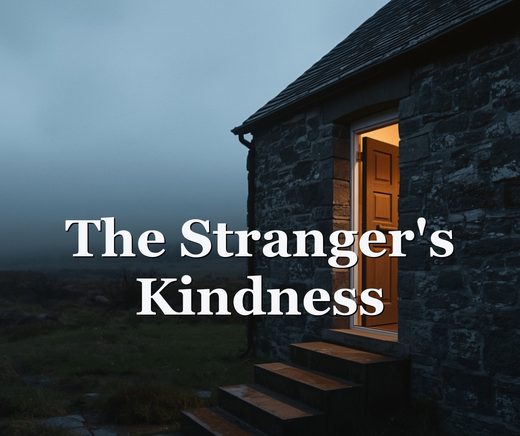
A car has stopped. A woman is standing at the roadside in weather, and somebody has pulled over and wound the window down and offered her a lift into the village. It is an ordinary courtesy. It is also, in a suspense novel, the moment the reader's shoulders come up.
The genre has trained us into a peculiar reflex. Threats do not frighten us nearly as much as favors. A man who shouts is a known quantity. A man who insists on carrying your bag is a problem with no name yet.
Kindness creates an obligation, and obligation removes exits
The mechanism is social rather than physical, which is why it works on readers who have never been in danger in their lives. Accepting help puts you in debt. Once you are in the car, refusing the next thing becomes rude, and rudeness is a cost most people will pay quite a lot to avoid. The trap in a good thriller is rarely a locked door. It is a sequence of small courtesies, each of which would be graceless to decline, arranged so that by the time refusing is sensible it has also become impossible.
That is why these scenes are so uncomfortable to read. We recognize the manners. We know we would have got into the car too, and we would have done it for the same reason the character does: not because we were fooled, but because we did not want to seem suspicious of somebody being nice.
Nobody in a thriller is ever trapped by a locked door. They are trapped by not wanting to be rude.
The kind character with the wrong timing
Writers who use the device well are exact about a single detail: the helper arrives slightly too soon. The neighbor who appears with soup before the death has been announced. The colleague who offers to take over the file the afternoon before anyone was told there was a problem. The kindness itself is unimpeachable. What is wrong is that it is early, and being early is the one thing generosity cannot explain.
The reader usually notices before the character does, which produces the particular helpless quality of good suspense. We are not ahead because we are cleverer. We are ahead because we have the luxury of suspecting a man whose face we do not have to look at while we do it.
The version that hurts
The lesser use makes the helper a predator throughout, and the reveal costs the reader nothing but a small satisfaction at having been right. The better use makes the help genuine and the motive impure at the same time, which is much closer to how people actually behave. The neighbor really does want to be useful, and also wants to be inside that house, and both things are true at once without either canceling the other.
Standalone novels tend to be where this is worked hardest, because a standalone can afford to leave the question open in a way a series cannot. The Ungrieved and The Shadow on Ravenswood Hall both spend their length on people who arrive to assist a household in difficulty and are, in the end, not quite explicable in either direction. The discomfort survives the last page.
What it costs the character afterward
There is an aftermath that the best of these books insist on. A person who has been harmed by somebody who was kind to them does not simply learn to be careful. They lose the ability to accept ordinary help without a small internal calculation, and that calculation is exhausting, and it does not switch off. Long after the plot has resolved, the character is still the person who hesitates when a stranger holds a door.
Which is the quiet argument these novels are making, underneath the suspense. The damage is not the incident. The damage is what the incident does to every innocent kindness that comes afterward, and there is no chapter in which that gets given back.
The Unmapped and What the Dead Man Saw are both free to start, if the idea appeals, and both are patient with characters who cannot decide whether they are being looked after or worked on.
Brian Courrier writes gothic crime, espionage and science fiction. Browse the collection or start with a free book.