The Waiting Room: The Hour a Novel Spends Doing Nothing
The hard chairs, the wrong-facing window, the clock nobody can hurry. Why the room where a character waits does more work than the room with the body in it.
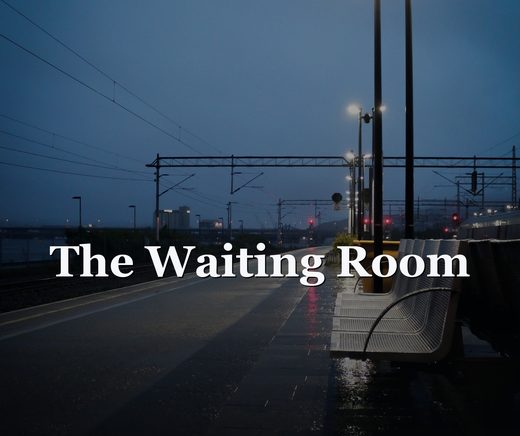
There is a room in almost every mystery that readers forget to notice. It has hard chairs, a window that faces the wrong way, and a clock that is either too loud or has stopped. Nobody is killed in it. Nothing is discovered in it. It is the room where a character waits to be told something, and it is quietly doing more work than the room where the body was found.
Waiting is the part of an investigation that cannot be delegated or skipped. A search can be summarized in a sentence. A confession can be delivered in a paragraph. But an hour spent sitting on a bench outside a closed door has to be lived at something close to its real length, or the reader will not believe it happened. It is the one place in a novel where a writer cannot cheat on time.
The furniture of dread
Notice how carefully good writers furnish these rooms. The detail is never decorative. A chair that is slightly too low, a radiator that ticks, a notice board with a curling paper the character reads four times without absorbing a word: each measures how long the wait has gone on, and how badly the person is holding up. You cannot say a character is frightened and be believed. You can say they have read the fire regulations three times, and be believed completely.
Fiction built around inquests and probate lives in rooms like this by necessity. The Thrushmere Inquests take their whole structure from proceedings that consist mostly of anterooms and adjournments, of people summoned at ten and heard at four. An inquest is a machine that manufactures waiting, then asks the people caught inside it to behave normally, which nobody manages for long. What the reader learns about a family in that anteroom is generally more damaging than anything said under oath.
The clock nobody can hurry
Espionage understands the same principle from the opposite direction, and is more honest about it. In a spy novel, waiting is not an interruption of the work. Waiting is the work. The agent who arrives twelve minutes early and cannot be seen to be waiting has a harder task than the one who has to run. A station platform, a cafe with one exit, a rented flat overlooking a street corner: these are workplaces, and the skill on display is the ability to sit still and look like a person with a reason to be there.
That is the discipline the Marcus Vane novels keep returning to. Cold War tradecraft made a profession of stalled time, and it produced a peculiar kind of tension: the danger is not that something will happen, but that nothing will, and that the nothing will be noticed. A man who has been standing on a platform too long is a man who has already made a mistake.
Anyone can be interesting while something is happening to them. The question a waiting room asks is what a person is like during the part nobody would put in a report.
Why the house is worse than the station
A public waiting room is at least honest about its purpose. The country-house mystery and the coastal gothic are crueler, because they hide the waiting room inside a drawing room. The Margot Fenn novels rely on this: people who cannot leave, in a house designed for comfort, sitting through the interval between the death and the explanation. There is tea. There is a fire. There is nothing to do. Politeness becomes the instrument of the pressure, since nobody may admit what they are all waiting for.
The Tide House books hand the job to the tide. When the causeway is under water the wait is not a social arrangement anyone could break; it has an arrival time and does not negotiate. A house that holds its people until the sea allows otherwise is a waiting room with weather for a door.
The record does not wait
This is where documentary science fiction gets its cold edge. A file does not sit outside an office growing anxious. In The Threshold Bureau and The Honest Machine, the record is complete the moment it exists, and every delay is on the human side of the desk: someone has to read it, decide, and be responsible. The horror in those books is often just a gap between when a thing became known and when a person got around to knowing it. The machine has been waiting patiently the entire time, which is not the same as waiting at all.
What the reader is doing
The reason all of this works is that the reader is in a waiting room too, and has volunteered for it. A mystery is a promise of an explanation, deliberately withheld. Every chapter of stalled time asks a little more patience against a payment that has not arrived, and the pleasure of the form depends on the interest accruing. Rush it, and the answer feels cheap. Stretch it past what the furniture can bear, and the reader gets up and leaves the room.
So the next time a novel puts someone on a bench in a corridor and appears to waste a page, read it slowly. That is not the book idling. That is the book working with the only material it cannot fake.
Brian Courrier writes gothic crime, espionage and science fiction. Browse the collection or start with a free book.